
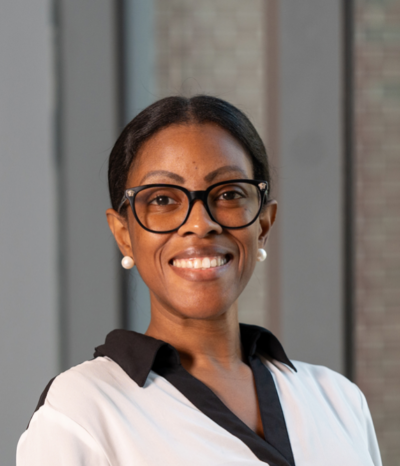
As the community oral history and project coordinator, Johnson leads the community oral history training program through which local communities and organizations receive the information and resources necessary to conduct oral history projects. The fall training typically takes place virtually in the months of September, October and November. The first training session is on project design, where rising historians decide which people they will interview and construct their administrative teams.
The second training session is about interviewing. Trainees learn how to conduct background research and formulate interview questions. The final fall training session is on oral history ethics.
“When discussing our training process, inquirers often ask why ethics are so important when conducting oral history interviews, especially if the interviewer is from the same community as those who are being interviewed,” says Johnson. “It is still easy to conduct unethical work pertaining to oral history regardless of the origin of those involved. It’s important to keep discussions honest, compensate the person being interviewed for their time and be as non-exploitative as possible.”
At the end of fall training, there is an opportunity to attend an in-person training event in which trainees can work personally with archivists from Avery Research Center for African American History and Culture and the Marlene and Nathan Addlestone Library’s Special Collections to gain hands-on training in archival research and data collection. Training resumes in the spring beginning in February. The February session continues training on conducting oral history. In March, trainees learn about transcript writing, processing metadata and abstracts. Lastly, in April, trainees are educated on the different avenues they can take to share their data. Upon completion of the training, community oral historians can donate their data to an archive, publish their data on a website or even steward their collection themselves.
“One of the most exciting parts of training is that not only does the Lowcountry Oral History Initiative provide a $5,000 stipend for these rising community oral historians, but we also have field kit day in which we provide field kits for the trainees and train them on using voice recording equipment,” says Johnson.
The field kit consists of a bag and audio recorder. There are also some amenities like pencils, notebooks, stickers, hygiene supplies and thank you cards or gifts for the people being interviewed. Luckily with a stipend, the oral historians can purchase other equipment that they feel would make their interviews successful.
Johnson welcomed a third for the 2026-27 academic year. After training two cohorts, one may ask what motivates Johnson to continue working with the Lowcountry Oral History Initiative.
“Working with LOHI allows me to contribute to the Charleston community,” says Johnson. “Working as a faculty member and a community oral history project coordinator can be tiring but being able to aid African American settlement communities in protecting their property and history feeds my soul. Additionally, the library allows me to further develop my skills on the more technical aspects of oral history such as processing collections, generating the transcripts of interviews and writing metadata. These are some of the biggest roles that I have at the library.”
Thanks to the hard work of Johnson and the network of communities that Gaylord and Dorothy Donnelly Foundation’s Broadening Narratives Initiative provided, LOHI has been a success since its formation. The Lowcountry Oral History Initiative taught cohorts of aspiring African American community oral historians how to control their own narratives and use their own platforms to aid in the protection of their communities.
Johnson and the College of Charleston hope to connect with more rising oral historians to promote public access to the stories of diverse Charleston populations.